Electrocautery Bipolar vs Monopolar What is The Difference? ATL Technology
Monopolar VS. Bipolar Electrosurgery

which is called diathermy, uses heat from a high-frequency electric current to 'cut' away the tonsils. The heat can also be used to seal the blood vessels to stop any bleeding. There are two types of diathermy: monopolar and bipolar. In monopolar diathermy, the electric current passes between the tips of the diathermy instrument and a plate
Demonstration the current flow during bipolar (a) and monopolar (b)... Download Scientific Diagram

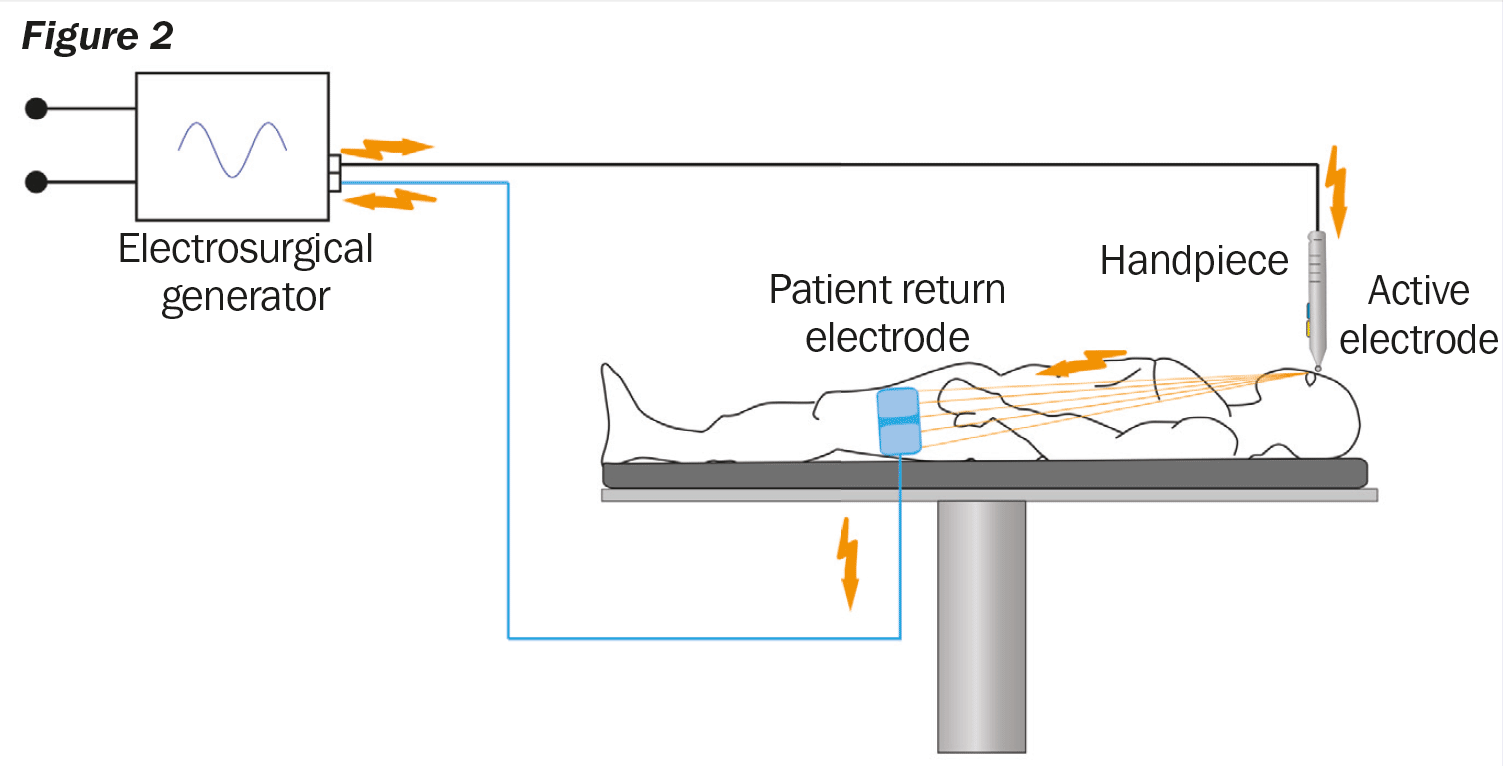
The simplest explanation of the differences between these two methods is that with monopolar electrosurgery, the current passes from the probe electrode, to the tissue and through the patient to a return pad to complete the electric current circuit. In bipolar electrosurgery, the current only passes through the tissue between the two arms of.
LED Surtron 80 Diathermy Monopolar and Bipolar Setup — Stark Medical Pty Ltd

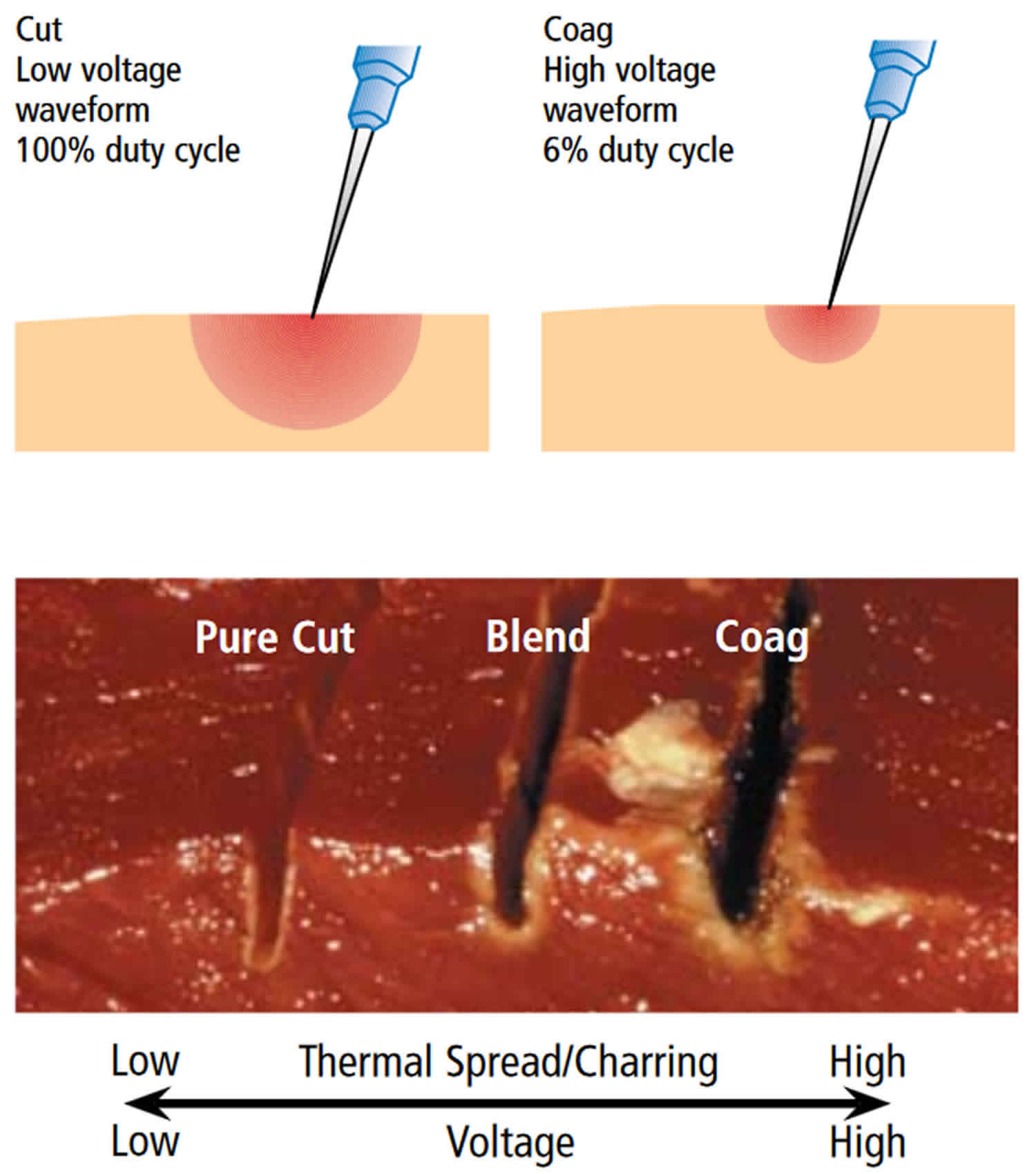
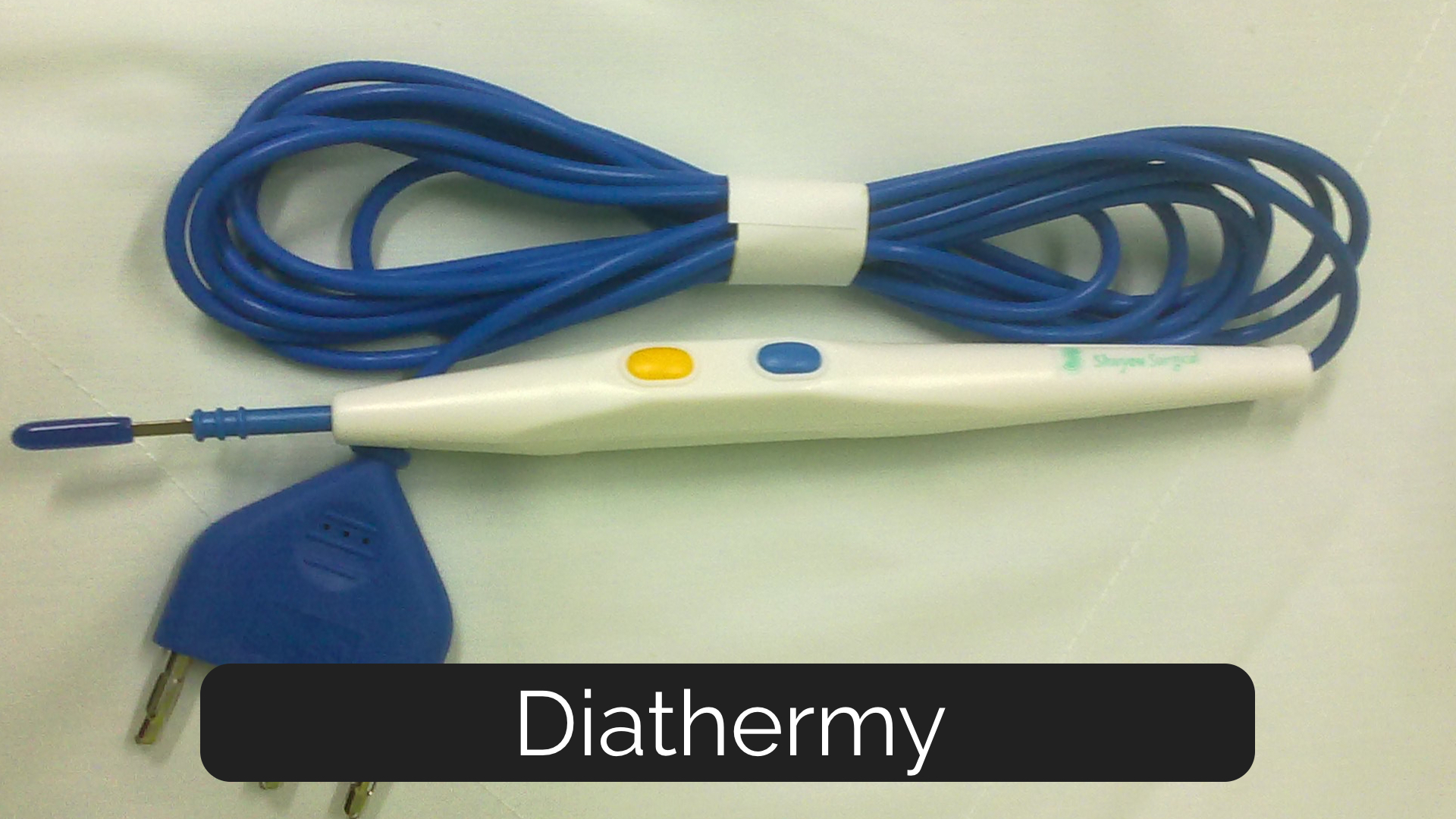
Monopolar electrosurgery involves a patient return pad. In monopolar electrosurgery, the current passes from the probe (electrode), through the tissue, through the patient return pad, and then completes the electrical circuit. Modes for monopolar electrosurgery include cut, blend, desiccate, and fulgurate. A pencil electrode is used typically.
General Surgery Clinics A Surgeon's Blog Types of Diathermy/Cautery in Surgery

Introduction. Electrosurgery utilizes an electric current to generate the desired tissue effect and is being used increasingly for open and laparoscopic procedures 1-5.Monopolar and bipolar diathermy are the most commonly utilized modalities, with the latter thought capable of more accurate control of the electric current, thereby limiting the spread of thermal energy to surrounding tissues.
HCC 1472Lesson16bElectrosurgery Monopolar vs Bipolar devices YouTube

Bipolar diathermy is the application of electrical current to human tissues, via two active electrodes (commonly insulated forceps).. There was a cost-saving identified when using bipolar rather than monopolar technology. Vessel sealing technology. These specialised instruments seal vessels and tissue bundles for surgical ligation in.
Community Eye Health Journal » Electrosurgical units how they work and how to use them safely
Do you want to learn more about the differences and applications of monopolar and bipolar electrosurgery in various surgical fields? Watch this video to see how these two modes of energy delivery.
Monopolar and Bipolar Diathermy Difference, Uses, and Advantages.
Bipolar cautery instruments generate heat only between the two tips, while monopolar cautery instruments distribute energy in a larger area. As a result, bipolar cautery is generally considered.
PPT THE BASIC SURGICAL SKILLS PowerPoint Presentation, free download ID646619

Difference Between Monopolar and Bipolar Diathermy: Imagine a high-frequency electric current being used for surgical purposes.That's diathermy, and it comes in two flavours: Monopolar and Bipolar. Monopolar diathermy uses a single electrode (like a scalpel) to deliver high-frequency electrical current through the patient's body to the target tissue.
What Are the Differences Between Bipolar I and Bipolar II?
:max_bytes(150000):strip_icc()/bipolar-1-vs-bipolar-2-5205361_final-a20ec58641ed44ed82c7c7ba1d94bcd9.jpg)
Diathermy is produced by rotation of molecular dipoles in high frequency alternating electric field - the effect produced by a microwave oven.. Electrocoagulation uses monopolar or bipolar electrodes to produce low voltage and high-amperage current at relatively low power. An indifferent electrode prevents accumulation of current in the.

Diathermy is the use of high frequency alternative polarity radio-wave electrical current to cut or coagulate tissue during surgery. Its two main settings are cutting and coagulation. Two types of diathermy can be used, either monopolar or bipolar. Consideration should be given to the patient with cardiac pacemakers, metal work in situ, or.
Electrosurgery
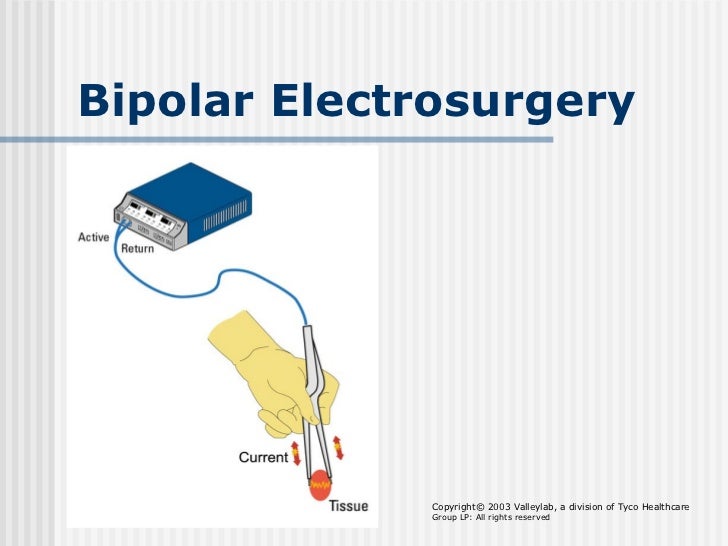
With the monopolar device, the current passes from the active electrode to the target lesions through the patient's body and finally exits the patient via a return electrode. With the bipolar device, the current only passes through the tissue between the two electrodes of the instrument [14, 15]. More convenient and safer modes of treatment.
Comparison of monopolar and bipolar current for TURB 1.914 Download Scientific Diagram

The easiest way to understand the difference between "monopolar" and "bipolar" electrosurgery is to understand how the circuit is closed. As you may recall from our blog post on electrosurgical systems, many electrosurgical operations require a dispersive pad to close the circuit. The operations that utilize a dispersive pad are.
Diathermy, diathermy therapy, short wave diathermy & diathermy treatment
There was a significant difference between coblation and bipolar groups in terms of delayed hemorrhage (Odds Ratio [OR] = 0.27, P = 0.005) and post-operative pain (standardized mean difference [MD] = -2.13, P = 0.0007).. Compared to monopolar diathermy, bipolar diathermy provides more control over the targeted area and uses less energy, thus.
General Surgical Instruments Operating Theatre Basics Geeky Medics
In a randomized trial, pain scores on day 1 were lower for the diathermy group, but were no different on days 2 through 5 . Monopolar versus bipolar — Electrosurgery can be performed using either a monopolar or a bipolar instrument. The main difference between these modalities is the pathway of the current.
Valleylab Force FX8C Monopolar/Bipolar Diathermy Units Photon Surgical Systems Ltd

As a result, bipolar electrosurgery is often referred to as 'wet field' cautery. In monopolar electrosurgery (Figure 2), the active electrode is placed at the surgical site. The patient return electrode (also known as a 'dispersive pad' is placed somewhere else on the patient's body. The current passes through the patient as it.
[PDF] Electrosurgical generators and monopolar and bipolar electrosurgery. Semantic Scholar

Bipolar vs Monopolar Procedural Differences. Instead of traditional procedures, utilizing scalpels, electrosurgery utilizes either bipolar or monopolar options with a high-frequency electrical current for cutting, coagulating, desiccating and fulgurating tissue. Each methodology requires specific instruments, and each has its own specific.
.